Optimus Investments | Exclusive real estate investments for passive income

…that ultra-high-net-worth investors (billionaires, institutions and family offices) allocate large portions of their investment capital outside the stock market…
Asset classes such as real estate, private equity and hedge funds dominate the investment strategies of ultra-high-net-worth investors.
Meanwhile, the average investor remains largely invested in equities and bonds…
Seeing the investment world like a billionaire is one thing—but how do you find what to invest in? And how do you manage those investments once you find them? That is why we are here: to source high-quality alternative investments for you.
We are passionate about helping investors understand private alternative investments and how they can reshape a financial portfolio. These investments were previously reserved for a select group of institutional investors. Many investors are still unaware of the benefits of private alternatives.
Anyone who has invested in the stock market for some time has probably experienced significant gains—and significant losses. Investors approaching or already in retirement know the concern caused by a sharp fall in portfolio value. Diversification is one of the main reasons investors consider alternatives. A survey of leading US investment advisers identified diversification and attractive returns as two of the principal reasons for investing in alternatives.
An investment that is uncorrelated with the stock market does not move in line with its rises and falls. Many investors believe they are diversified by holding listed REITs or other exchange-traded alternatives, only to find that they can be equally volatile and may add limited diversification value.
That is why we make an important distinction between public and private alternatives.
Many investors use private alternatives to diversify portfolios and reduce exposure to volatility. When public markets fall significantly, this can provide a measure of protection because not every holding is affected in the same way. Public markets can be unpredictable even in a stable economy, while private alternatives are largely insulated from day-to-day public-market movements.
Real estate is a useful example. If you invest in mortgage-backed lending or own a rental property, the borrower or tenant may continue making mortgage or rent payments despite significant stock-market movements.
In a traditional public investment, share prices fluctuate for many reasons—often unrelated to the underlying business performance—and are not generally linked to a specific tangible asset. Interests in private real estate investments are not publicly traded, avoiding day-to-day public-market volatility, and the investment is backed by a real asset: property.
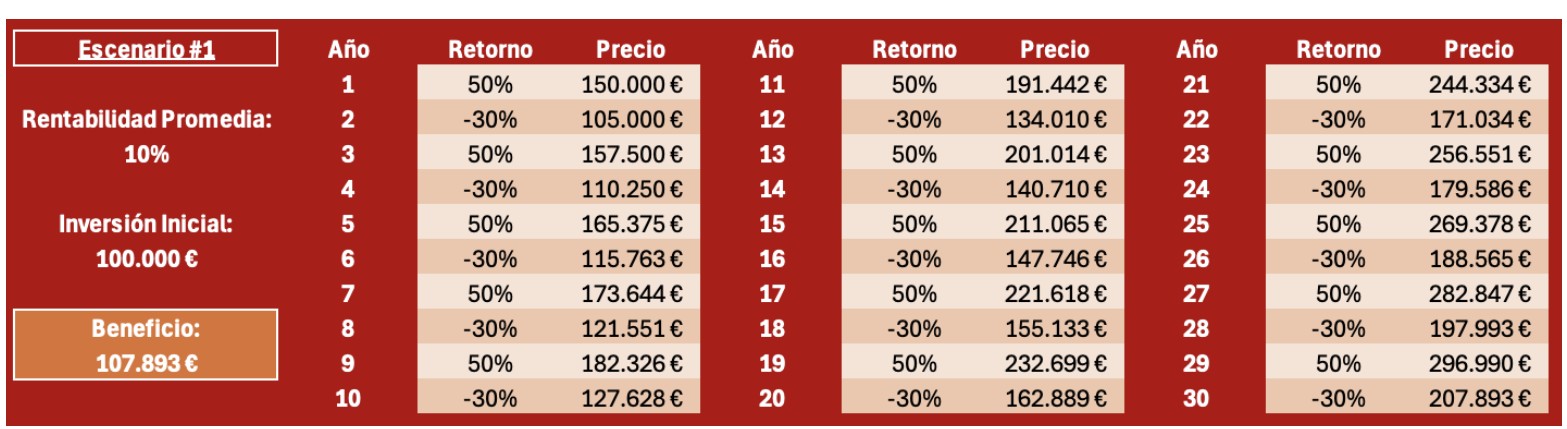
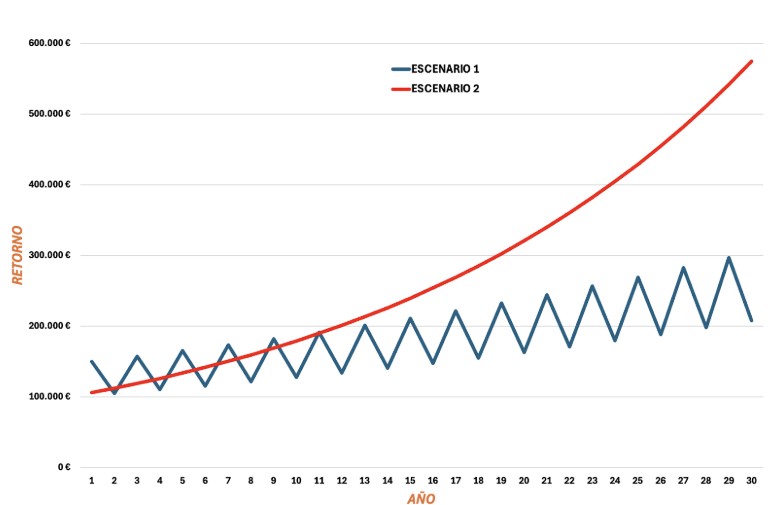
Some argue that volatility is not a concern for long-term investors because, despite market cycles, equities have historically produced average long-term returns often quoted at around 6–8%. But volatility can materially reduce the effect of compounding. The following illustration explains why.
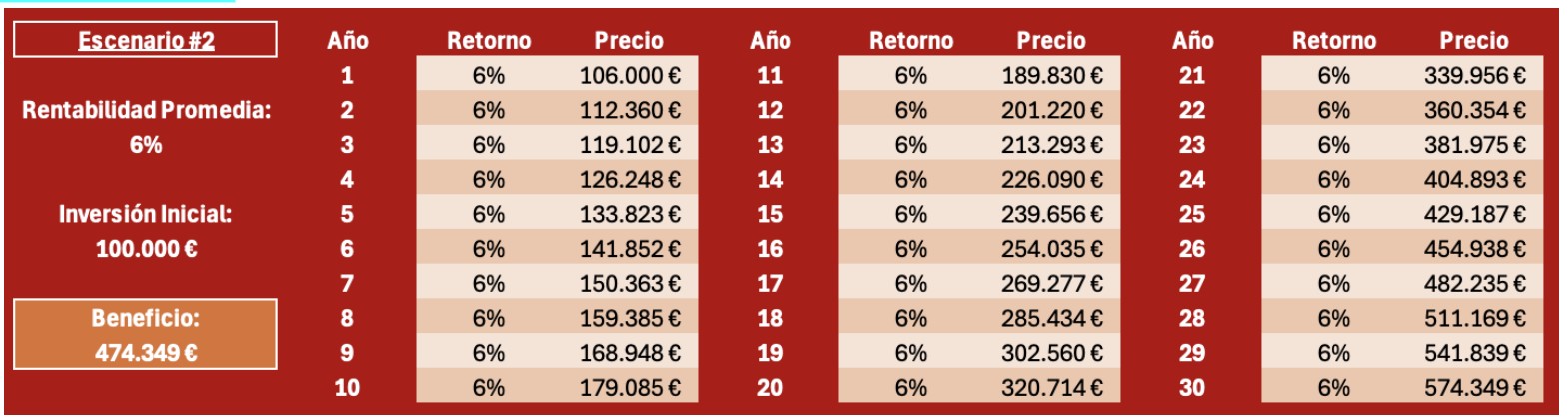
The following two scenarios assume an initial investment of €100,000 held for 30 years.
A quotation widely attributed to Albert Einstein calls compound interest the eighth wonder of the world. This illustration shows the power of consistent compounding.
Scenario 1:
Scenario 2:
Scenarios 1 and 2:
In many public investments, what you buy is a financial claim based on the discounted value of expected future earnings. You do not directly own the underlying asset. Even when investing in a listed REIT, there are several layers between the investor and title to the property.
If you buy a rental property, you directly own the home. If you acquire mortgage-backed debt, you hold security over a property. In our structures, investors retain an interest in the acquired asset or the secured real estate loan and the associated lender rights, subject to the terms of each investment.
This does not apply to every private alternative investment; it depends on the asset and strategy. Unlike many public-market holdings, however, numerous private investments generate current income through monthly or quarterly cash distributions. Some are structured with a preferred return under which investors are paid first.
Investors who have sought income from public investments such as bonds or dividend-paying shares know that this can be difficult. We regularly speak with investors whose portfolios do not generate the income they need. Public-market volatility may increase risk while offering only modest income yields.
Busy investors value their time, and actively managing an asset or portfolio requires substantial work. Real estate is a good example: many people begin by considering a rental apartment, only to discover the workload and steep learning curve involved. At that point, some assume there are no other options.
A new range of opportunities has emerged, many of which are fully passive for investors. Our investments, for example, are managed on their behalf. Truly passive structures also allow investors to benefit from an experienced operator's expertise, team and relationships.
Private alternatives offer many potential benefits but also involve disadvantages. The most common issue is liquidity: private investments are usually linked to an underlying asset, and realising the investment generally requires that asset to be sold or refinanced.
Historically, these investments were limited to institutional investors or highly connected individuals. This created a substantial difference between institutional investment strategies and those available to the average private investor.
Institutional investors—such as pension funds and family offices—often allocate a meaningful share of their portfolios to alternatives, while the average private investor typically allocates far less.
We offer tailored investment mandates and co-investment opportunities aligned with your strategy and investment needs.
Be the first to hear when new qualifying investment opportunities become available.